Collect References Without Copying
References are how you show a photographer or a designer what you mean. Used badly, they turn you into a copy. This step is a method for using them well and turning them into one idea.
Collect wide, then cut hard
Save 30 to 40 images that feel like your three words from step 4. Go outside music on purpose: film stills, architecture, old packaging, paintings, book covers, fashion, street photography.
If every reference is another artist in your genre, the result will look like your genre and like nobody in particular.
Then cut to 12. Cutting is where the thinking happens. For each image, ask what exactly you like about it.
Take one thing from each
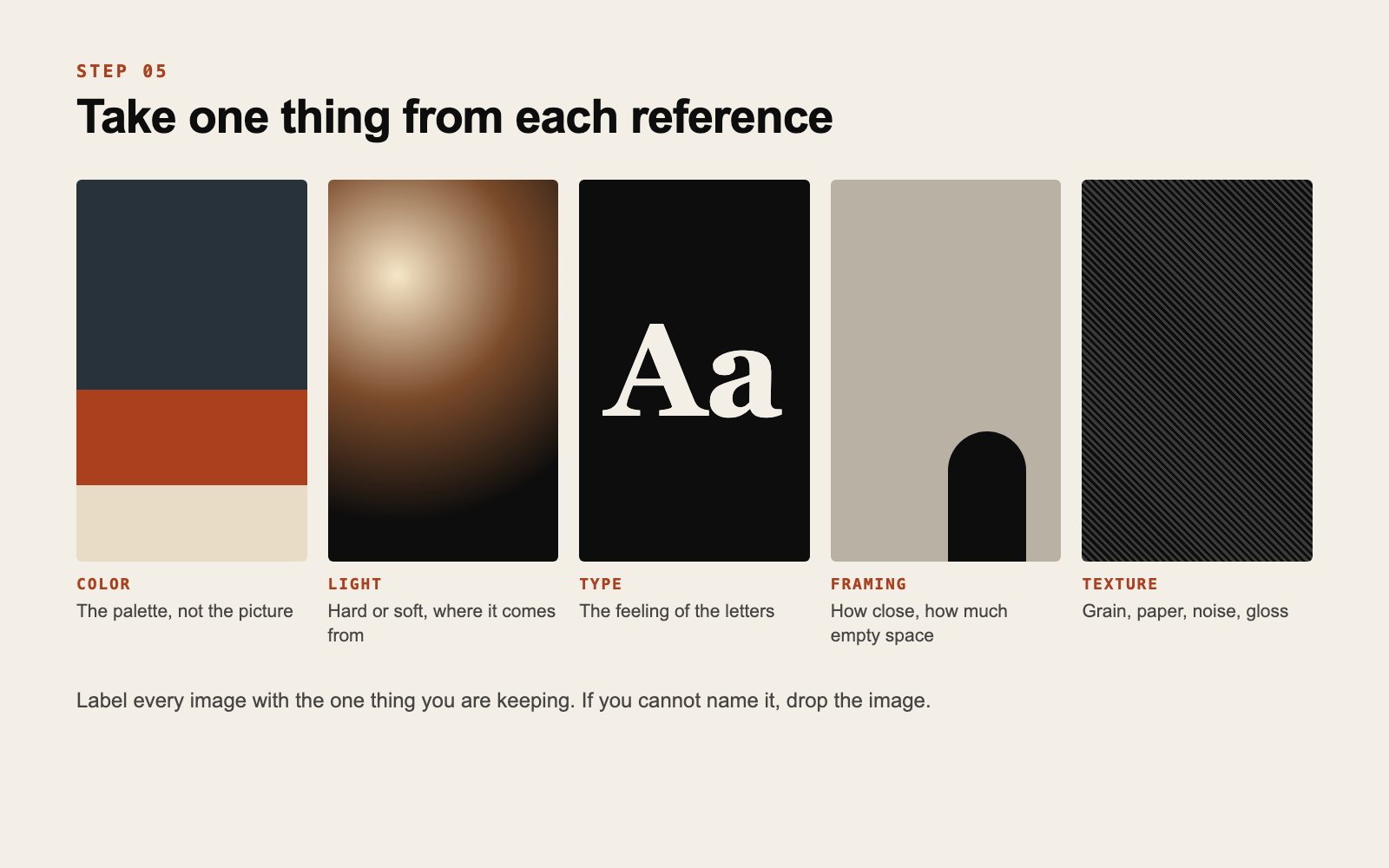
A reference is useful for one quality at a time:
- Color: the palette, separate from the subject
- Light: hard or soft, warm or cold, where it comes from
- Type: the feeling of the letters
- Framing: how close, how much empty space
- Texture: grain, paper, gloss, noise
Write that one word on top of each image. An image with no label goes out.
A reference you cannot explain is decoration. A reference with a label is a decision.
Where copying starts
Taking the color from one image, the light from another and the framing from a third gives you something new. Taking all five from the same image gives you someone else’s work with your face on it.
A quick check: if a fan of that artist would look at your cover and name them, you are too close.
One board, one page
Put the 12 labelled images on a single page with your three words at the top. That is the moodboard. It should fit on one screen, so that someone can understand the direction in ten seconds.
You will send this page to every person who makes anything for the project.
Turn the board into one idea
Your three words say how things should feel. The board shows examples. Before you choose colors, join them into one sentence you could photograph: a place, a time of day, an object, a situation. A late drive out of the city with the windows down. A kitchen at six in the morning before anyone else is awake.
Look for what repeats in your notes and on the board, and start from real things: where you write, where you grew up, what you wear. Write five versions of the sentence and keep the one you can picture fastest.
Then pick one element from it that can appear in every shoot, cover and video: an object, a kind of light, a place, a gesture. After a few releases, people recognize it before they read your name.
Test it with one question: could you plan a shoot from this sentence alone? If you cannot list five shots, make it more concrete.
Do this now
Collect, cut to 12, label each one. Then remove the two weakest. A board of ten strong images says more than twelve mixed ones. Under the board, write your idea in one sentence and your repeating element in one word.
Turning a pile of references into one clear direction is a big part of creative direction. We do that with artists.
If this is something your project needs, get in touch.
Get new posts by email
Ideas for independent artists. We will send a confirmation email. If you do not see it, check your spam folder.