What People See in the Room
On stage, people look at you for an hour. Online they give you a second. A show is the longest exposure your identity ever gets, and a lot of it is in your hands, even on a small stage with someone else’s lights.
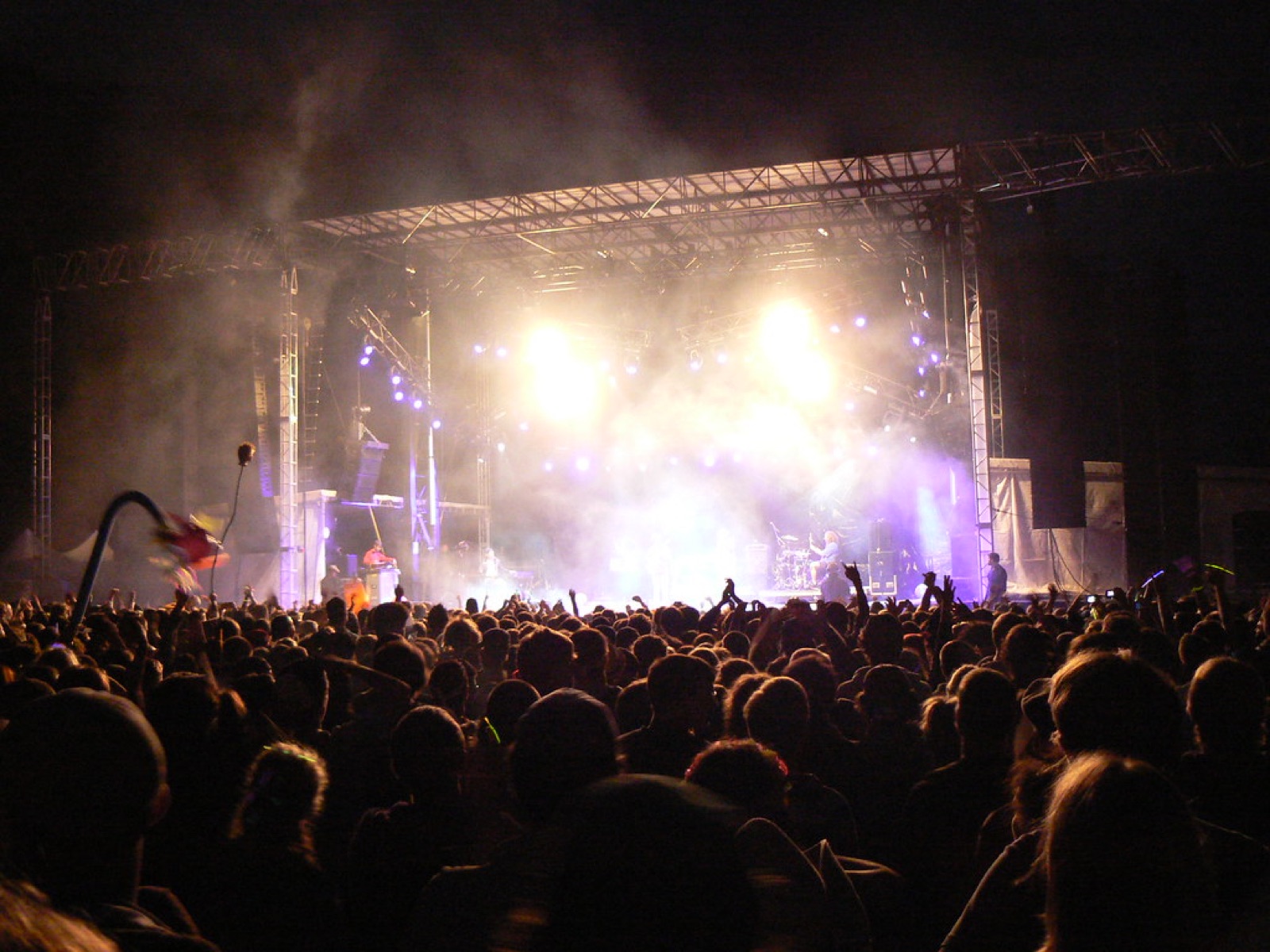 Photo: “Rothbury rocks” by curran.kelleher, CC BY 2.0.
What you control
Clothes. The biggest visual element you bring. The wardrobe thinking from step 13 applies: your palette, no accidental logos, coordinated across the band without uniforms. What you wear on stage should be related to what you wear in your photos.
Your gear and how it is arranged. Cables tidy, cases out of sight, instruments placed deliberately. A clean stage reads as a prepared project before a note is played.
One visual anchor. A backdrop, a banner, a drum head with your wordmark, a lamp you always bring, a cloth over the keyboard stand. One object in your palette that says whose show this is, in the room and in every photo taken that night.
The merch table. A cloth in your main color, the wordmark, clear prices. It is a small shop with your name on it.
What you can influence
Light. You rarely own the lights, but you can ask. A short note to the venue or the technician with two or three wishes is usually welcome: your main colors, no fast strobes in the quiet songs, a moment of darkness before the last one. Keep it to what a busy person can do in a soundcheck.
Screens. If the venue has a projector or LED wall, send one still image or a simple loop in your palette, in the size they ask for. A static image that belongs to you beats a default animation.
Bring one object, send one light note, and wear the palette. That already puts you ahead of most stages.
Think about the photos
People will film and photograph the show, and those images travel further than the room. Stand where the light is. Ask a friend or the house photographer for a few frames that match your shot list: a wide of the stage with the anchor visible, and one close portrait in action.
Those become the live photo in your press set from step 11.
Keep a stage sheet
Write a half page you can send to any venue: stage layout, your anchor, your light wishes, your wordmark file. Venues appreciate artists who make their work easier.
Do this now
Choose your anchor object and write the three-line light note. Put both in your gig checklist.
What your project looks like in the room starts from the same creative direction as everything else. That direction is what we do.
If this is something your project needs, get in touch.
Get new posts by email
Ideas for independent artists. We will send a confirmation email. If you do not see it, check your spam folder.