How to Keep a Music Project Moving When You Have Little Time
Most independent artists don’t stall because of talent or motivation. They stall because the few hours they have for music get spent deciding what to do instead of doing it.
When music shares the week with a job, a family and everything else, planning stops being a nice extra. It’s the only way the project keeps moving. Recording a single, shooting a video, finishing an EP, keeping a steady rhythm of posts: every one of these needs a plan, and the less time you have, the more that plan has to do for you.
Start from a goal, then keep breaking it down
“Work on the music” isn’t a goal. “Release a single in March, with a video and four weeks of content around it” is. A goal has an outcome and a date, and that’s what makes it possible to plan backward.
From there, break it into stages: recording, mix and master, cover, video, content. Then break each stage into tasks. Then break each task again, until every item is small enough to finish in one session and specific enough that you don’t have to think about how to start.
“Edit the video” is a weekend you keep postponing. “Pick the three best takes of the chorus” is something you do on a Tuesday night.
The smaller and more specific the next step, the less energy it takes to begin. And when energy is the scarce resource, that’s the difference between a project that moves and one that waits.
Give your time a shape
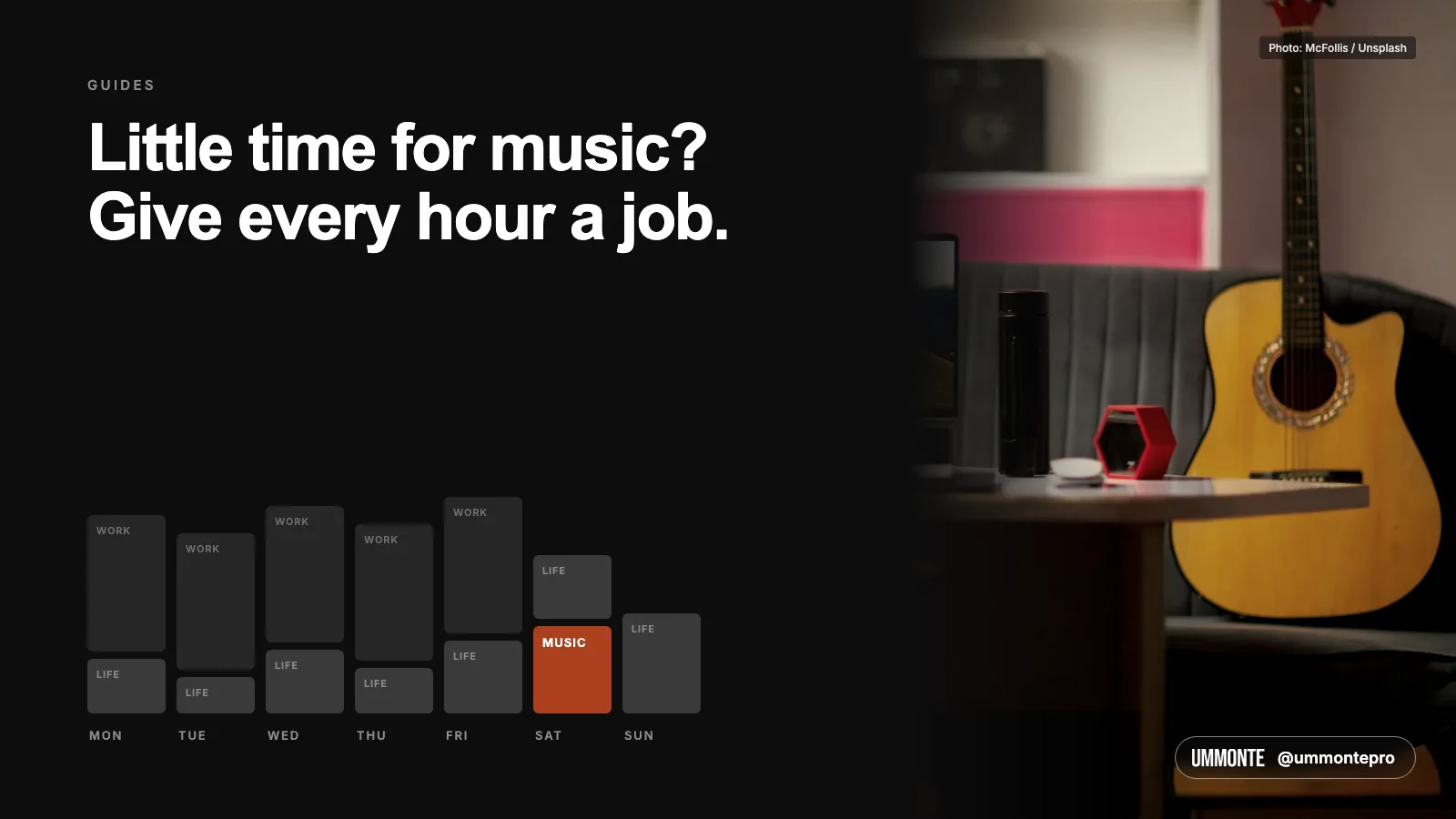
Look at the hours you actually have in a normal week, not the ones you wish you had. Then decide in advance what each of them is for.
Not all hours are equal. Some ask for a fresh head: writing, recording, making creative decisions. Others are fine for lighter work: answering messages, organizing files, scheduling posts. Putting the right kind of task in the right kind of hour is how a short week still gets real work done.
Let AI take the repetitive part
A lot of what eats an artist’s time isn’t music. It’s the logistics around it. This is where AI helps the most right now.
It can turn a goal into a first draft of a plan and split stages into tasks. It can draft captions, emails and release notes from your own notes, transcribe the voice memo you recorded on the bus, summarize a long thread with your producer, and keep a running list of what’s pending.
The songs, the voice and the decisions stay yours. The AI handles the paperwork, so the hour you saved goes back to the music.
Build a system that remembers for you
Goals, tasks, files and dates belong in one place, reviewed once a week. Fifteen minutes is enough to see what moved, what got stuck and what the next small step is.
Some weeks will fall apart anyway. Work gets heavy, life happens. A system doesn’t prevent that. What it does is show you exactly where you stopped, so you come back to a next step instead of a blank page.
When time is short, the plan is what turns a free hour into progress.
Where we come in
This is what we built CADENCE for. It’s our mentorship, starting at 60 days of planning and follow-up: we take your goal, whether it’s a release, a music video, an EP or a steady content routine, and turn it into a system we run together with you, day by day.
That means defining the goal, breaking it down into tasks you can actually finish, setting up a task organization system around your real week, putting AI on the repetitive work and following the plan with you so it doesn’t stall in week two. By the end, you know how to keep running it on your own.
CADENCE runs with a small number of artists per cycle. If your music has to fit into a full life and you want someone planning it with you, join the waitlist at ummonte.com/store/cadence.
Keep reading
If this is something your project needs, get in touch.
Get new posts by email
Ideas for independent artists. We will send a confirmation email. If you do not see it, check your spam folder.