What to Check Before You Sign With a Music Distributor
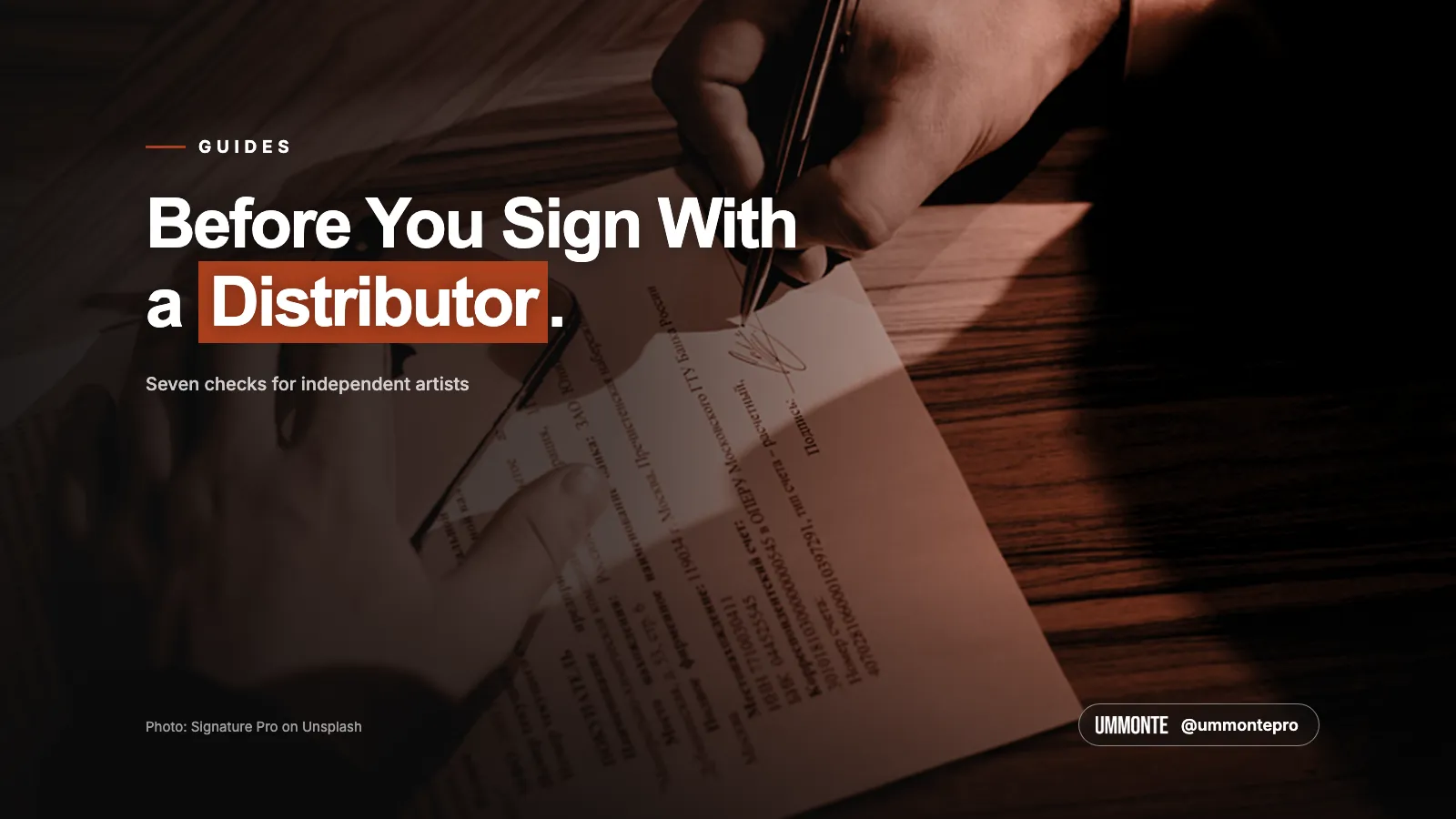
A distributor holds your music on its account. Seven things in its terms decide what happens when something goes wrong: you stop paying, you want to leave, or a store takes a track down. Check them before you upload anything.
This guide builds on a Hypebot piece by Bo Valpeters of Audora, published on October 22, 2026, in our own words and with our own additions.
Why it matters now
In September 2026, UMG sued DistroKid. In October, independent artists reported tracks disappearing from streaming services, some without notice. DistroKid said it removed “a very small number of recordings” in response to UMG’s claims and disputes the allegations, and nothing has been decided in court. Whatever the outcome, the episode shows that the terms about takedowns and disputes are worth reading before you need them.
How to use this list
Everything below is a suggestion, not a rule. Every distributor is different, and what matters most depends on your plans. At the start, we suggest checking all seven, because that is how you learn what to look for. Terms and contracts deserve a professional’s review. That is outside what we do, and worth having someone cover.
1. What happens if you stop paying
Fee models fail in different ways. Knowing which one you are in tells you what you risk.
- With a yearly fee, a lapsed payment can take your whole catalog down.
- With a per-release fee, releases usually stay up, but each new one costs extra.
- Find the non-payment terms and read them before you upload.
2. Who owns your ISRC and UPC codes
Streams, playlist placements and chart history are tied to these codes. This is where leaving becomes easy or painful.
- Ask whether the codes are assigned by the distributor.
- Ask whether you can take them with you when you leave.
3. How leaving works
Ask how a switch happens in practice. A distributor that makes this hard is a warning sign.
- Whether they will release your catalog elsewhere, how long takedowns take, and whether they charge for them.
- A safe order when you move: deliver through the new distributor with the same codes, confirm the release is live everywhere, and only then take the old one down.
4. Who you can reach when something breaks
Misattributed tracks, wrong release dates and merged artist profiles are common. When a track is removed or claimed, you need a person and a process.
- Whether you can reach a real person, and how fast they reply.
- Whether support quality depends on your price tier.
- What notice you get before a takedown, and how to dispute one.
5. How the money reaches you
Look beyond the headline royalty split.
- The payout threshold, and what happens to balances below it.
- Withdrawal fees and currency conversion.
- How long statements lag behind streams.
- Whether payments to co-writers and producers can be split automatically.
6. What you are opting into
Some services enroll music by default in YouTube Content ID, publishing administration or sync licensing. These can help. They can also trigger claims on your own videos or tie up rights you meant to keep.
- Read the term and exclusivity sections.
- Know which options are active, and how to turn them off.
7. What happens after release day
Distribution puts music in stores. It does not bring listeners.
- Check whether pre-save links, release pages and stats are included.
- Playlist pitching and promotion may need to be found, and paid for, elsewhere.
Before you upload, find three things in the terms: what happens if you stop paying, what happens to your codes if you leave, and what you opt into by default.
Checklist
- Non-payment terms read.
- ISRC and UPC ownership clear.
- Exit process and cost known.
- A real support contact and a dispute process.
- Payout threshold, fees and statement timing known.
- Default opt-ins listed and switched as you want.
- A plan for everything that happens after release day.
If you can’t find an answer in the terms, ask the distributor in writing. If a release is coming up and you want its plan, assets and metadata organized before you deliver, that is part of what we do.
Sources: Hypebot, What Should You Check Before Signing Up With a Music Distributor? by Bo Valpeters (October 22, 2026); Music Business Worldwide, DistroKid confirms it has removed tracks in response to UMG claims; Hypebot, DistroKid takedown wave hits indie artists after UMG lawsuit.
Keep reading
If this is something your project needs, get in touch.
Get new posts by email
Ideas for independent artists. We will send a confirmation email. If you do not see it, check your spam folder.