Where Your Identity Shows Up
Before choosing colors or fonts, you need to know where they will have to work. This step is a map of every place your project is seen.
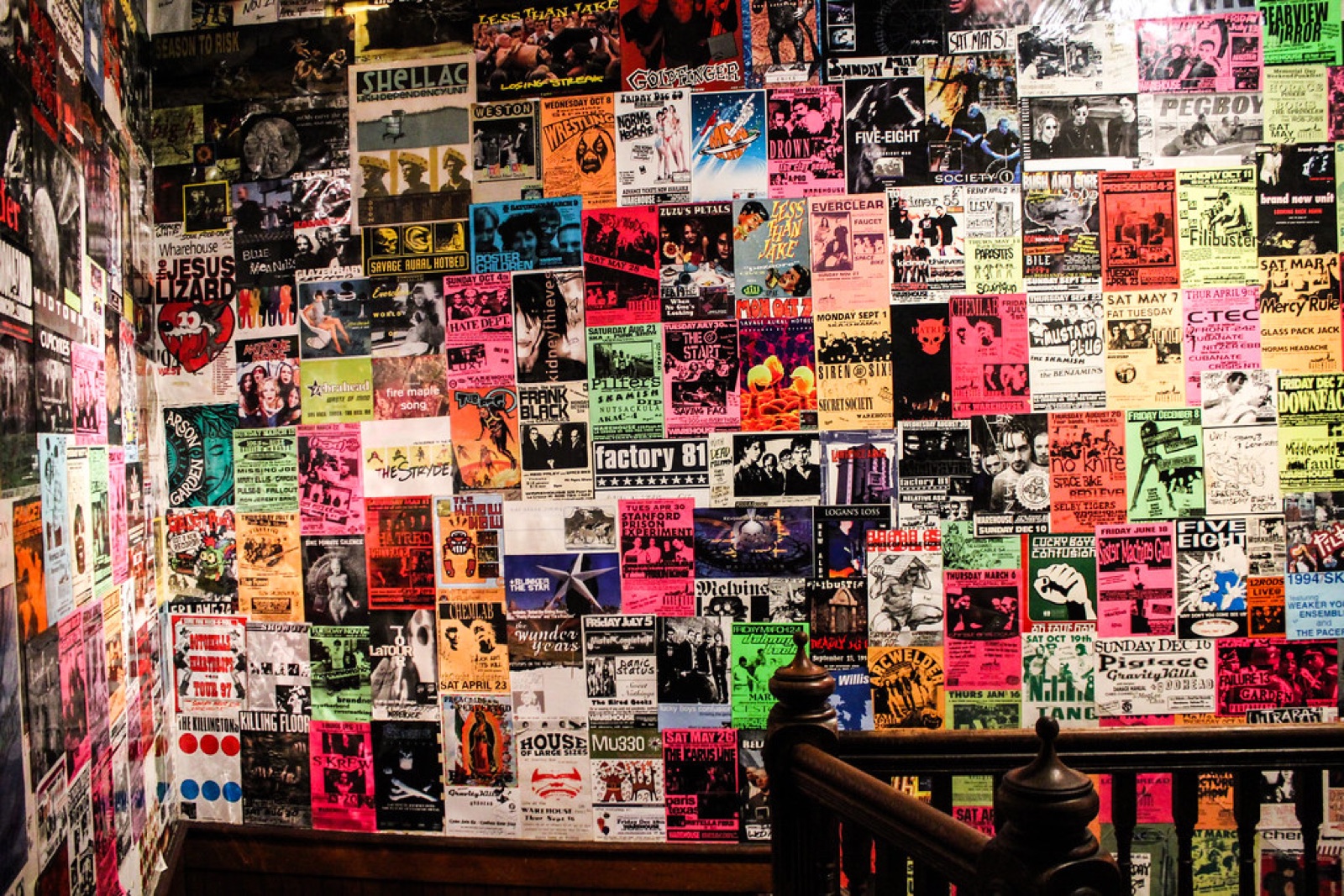 Photo: “IMG_3156” by aztalanturf, CC BY 2.0.
The list is longer than you think
Go through one normal week of a listener and count the surfaces:
- The square next to a track name in a streaming app
- The round profile picture on every platform
- Cover art on a release page
- Stories, Reels and other vertical video
- Video thumbnails
- The banner on a streaming or video profile
- Posters, flyers and lineup announcements
- Your press kit, when someone asks for material
- The stage, your clothes, the merch table
Small comes first
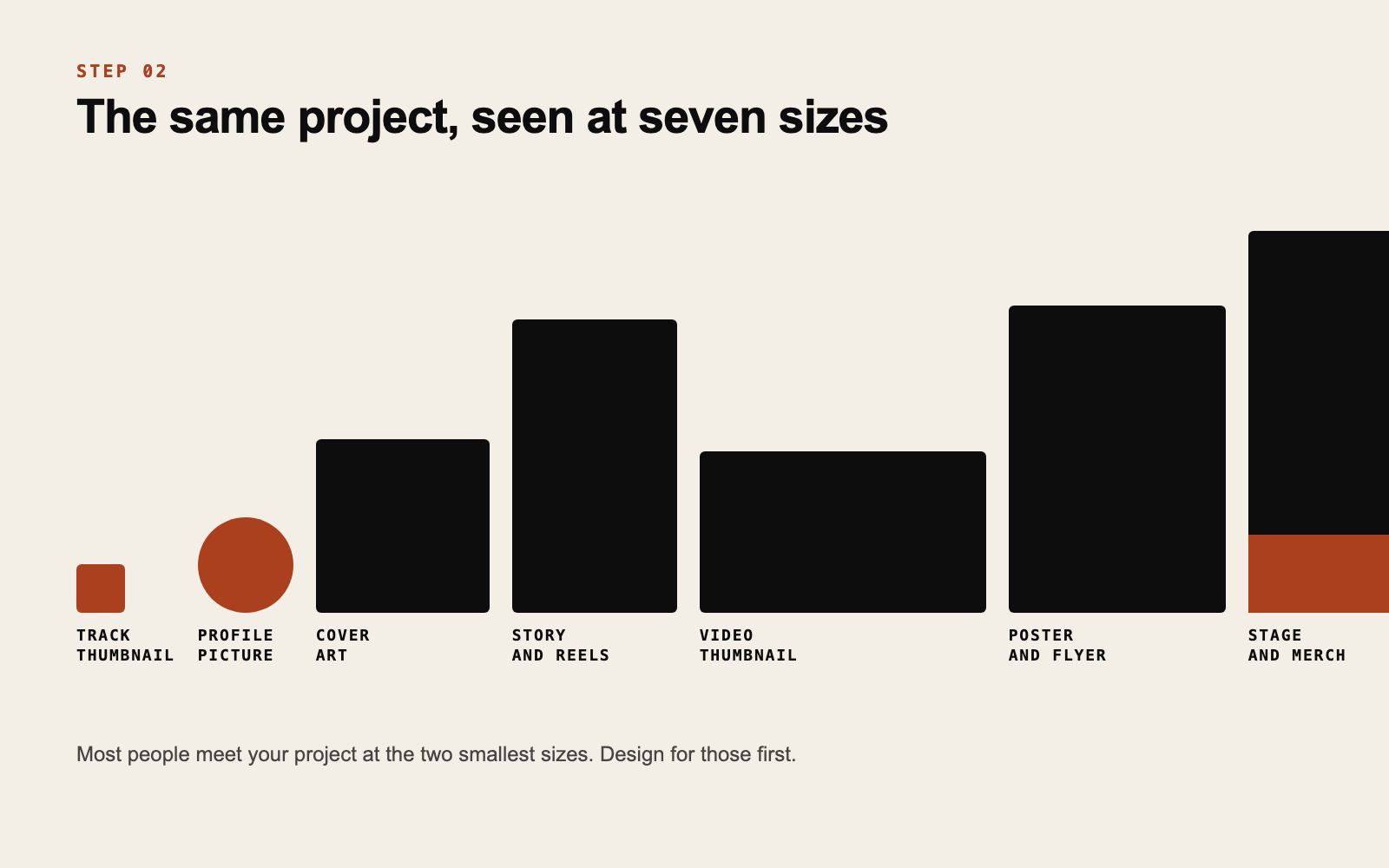
Look at the sizes. The two places with the most traffic, the track thumbnail and the profile picture, are also the two smallest.
Most artists design the other way around. They make a poster or a full-screen cover first, love it, and then shrink it. Details vanish, text turns to dust, and the profile picture becomes a dark circle.
Most people meet your project at the size of a fingernail. Design for that size first.
If an idea survives small, making it bigger is easy. The reverse almost never works.
Not all surfaces are yours
Some of these you control completely: cover art, profile, your own posts. Others are built by someone else using your material: a festival’s lineup graphic, a venue’s poster, a blog feature.
For the second group, the only thing you control is what you send. That is why a clear lead photo and a clean wordmark file matter so much. You will build both later in this guide.
Do this now
Write the list of surfaces where your project appears today. Mark each one with a C if you control it or an S if someone else builds it from what you send. Keep the list. Step 3 uses it.
Mapping where a project shows up, and what each place needs, is where we start with every artist. Here is how we work.
If this is something your project needs, get in touch.
Get new posts by email
Ideas for independent artists. We will send a confirmation email. If you do not see it, check your spam folder.