Write a One-Page Style Guide
You have made a lot of decisions in 25 steps. A style guide puts them on one page, so that you, a bandmate, a photographer or a designer can apply them without asking. One page is enough, and one page actually gets read.
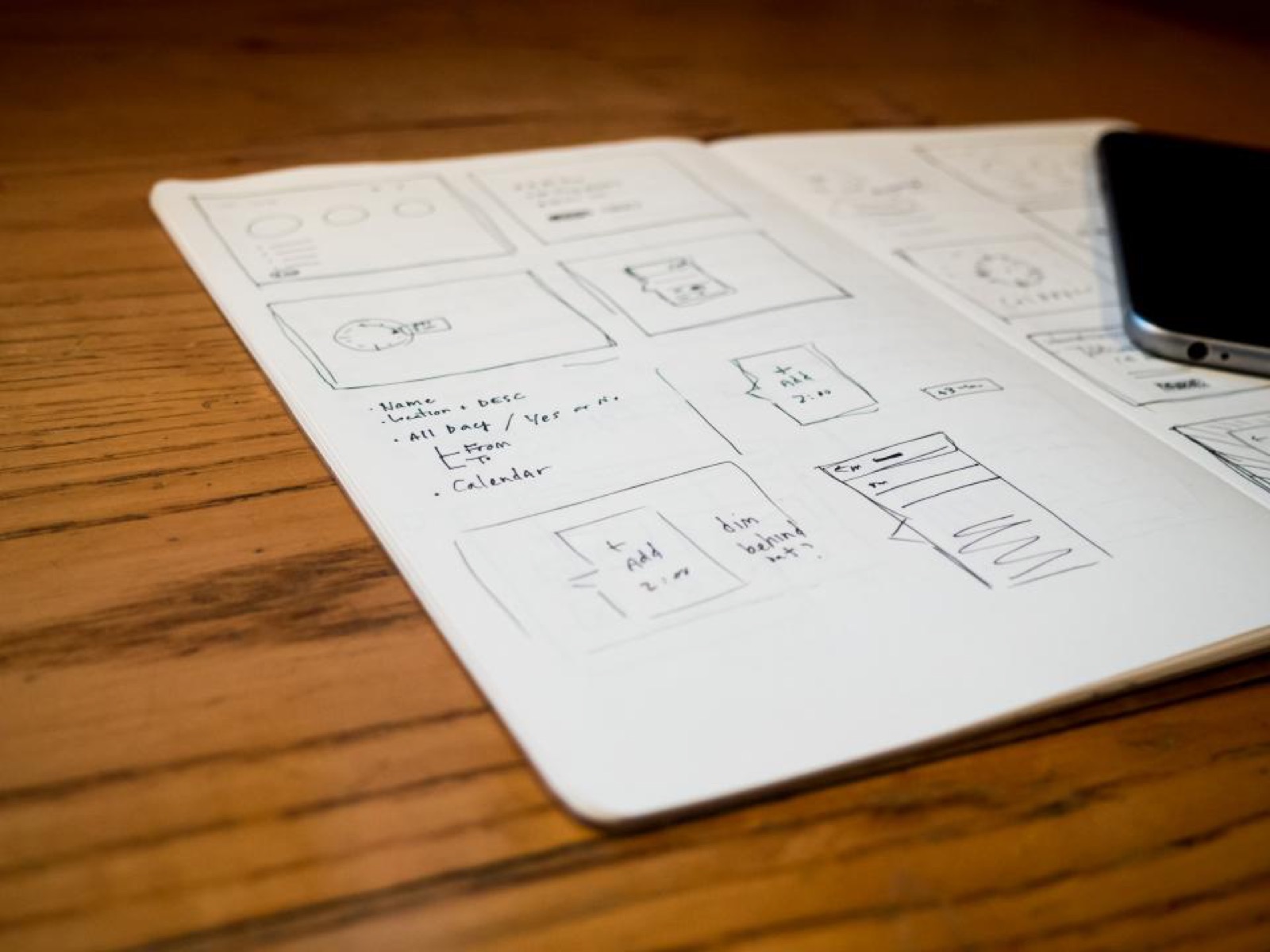 Photo: “Design Mockups” by Jeffrey Betts, CC0.
What goes on the page
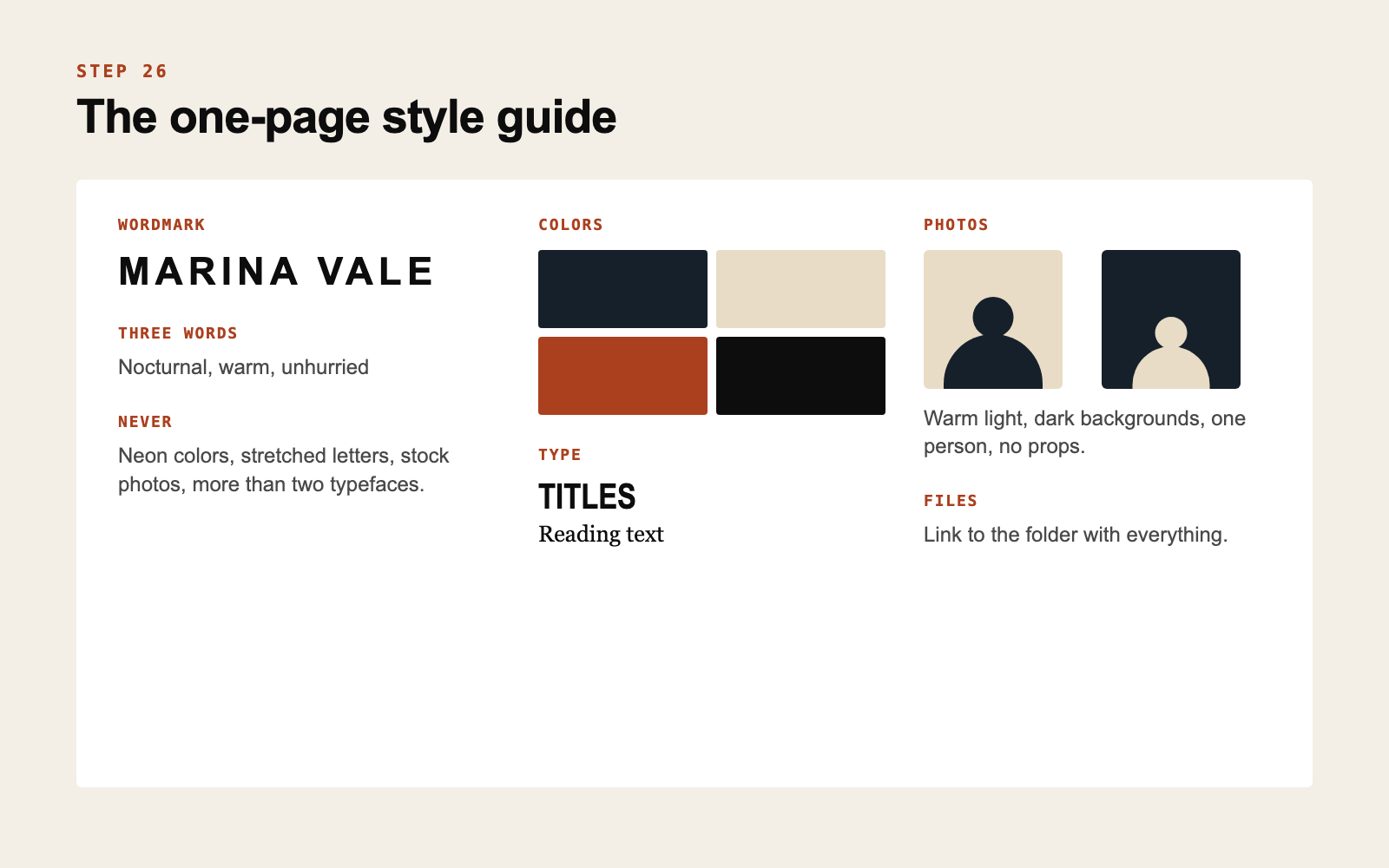
- Three words from step 4
- Wordmark: the dark and light versions, and the minimum size
- Colors: each swatch with its hex code and its role
- Type: title face and reading face, with the rule for each
- Photos: two or three examples and one line describing the look
- The detail: your grain, frame or shape, with the recipe
- Never: a short list of things that are off limits
- Files: one link to the folder where everything lives
The “never” list
This is the most useful part and the one people skip. Identities erode through small exceptions: a different font “just this once”, a neon flyer made by a venue, a stretched logo.
Write four or five specific lines. For example: no stretched or recolored wordmark, no more than two typefaces, no colors outside the palette on announcements, no photos older than the current release cycle.
A style guide is a list of decisions you never want to make again.
Keep it short on purpose
Brand manuals of 40 pages exist for companies with hundreds of employees. You need something a busy person will read on a phone before starting work. If it does not fit on one page, you are explaining and not deciding.
How to make it
Any tool works: a slide, a design app, a document. Use your own typefaces and palette on the page, so the guide is itself an example. Export it as a PDF and as an image.
Who gets it
Everyone who makes anything with your name on it: photographer, video editor, designer, the venue making a poster, the friend running your social accounts for a week. Send it together with the wordmark files.
It is allowed to change
Date the page. When you adjust something on purpose, update the guide the same day and change the date. Changing the guide first and the materials second keeps evolution deliberate. Step 29 covers when that is a good idea.
Do this now
Build the page with the eight items. Use placeholders where you are unsure, but fill in the “never” list today.
If you would rather make these decisions with a partner and receive them as finished assets, that is how our identity work ends.
If this is something your project needs, get in touch.
Get new posts by email
Ideas for independent artists. We will send a confirmation email. If you do not see it, check your spam folder.